University of Illinois: De-Risking Enterprise CMS Migration Through Stakeholder Alignment and Workflow Architecture
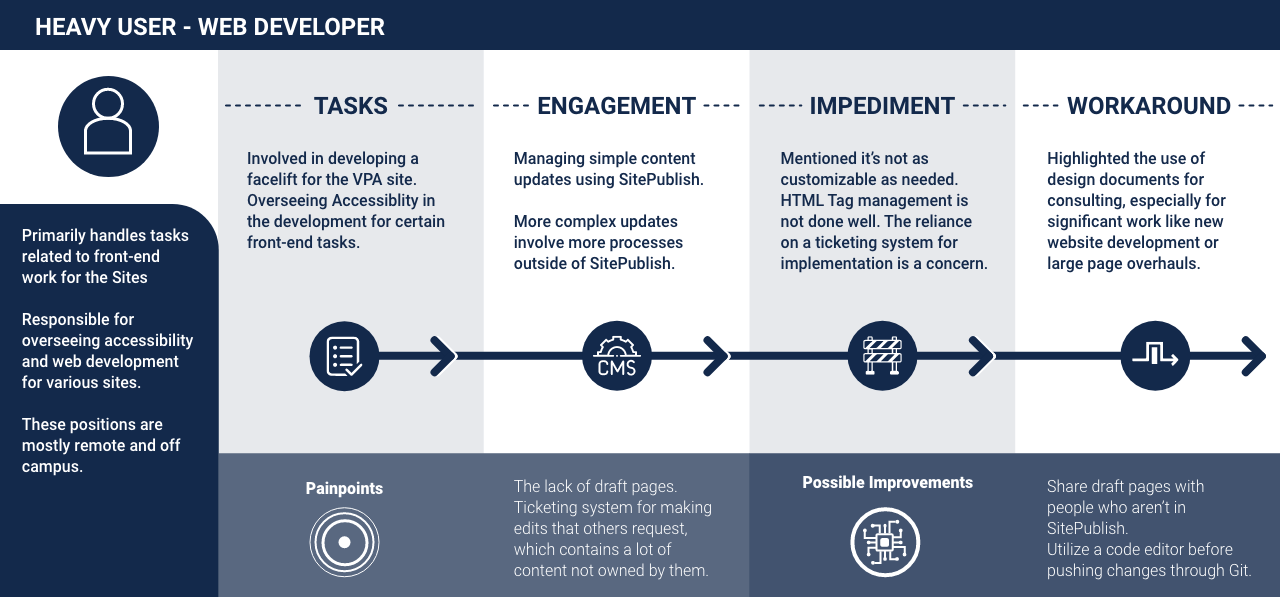
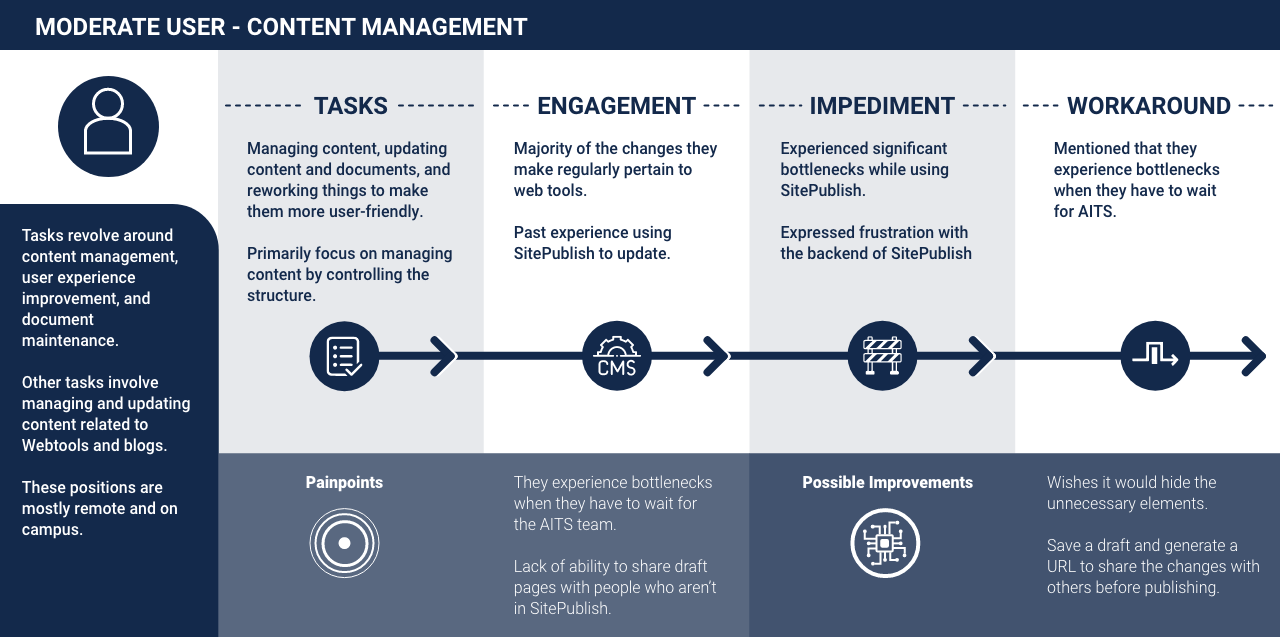
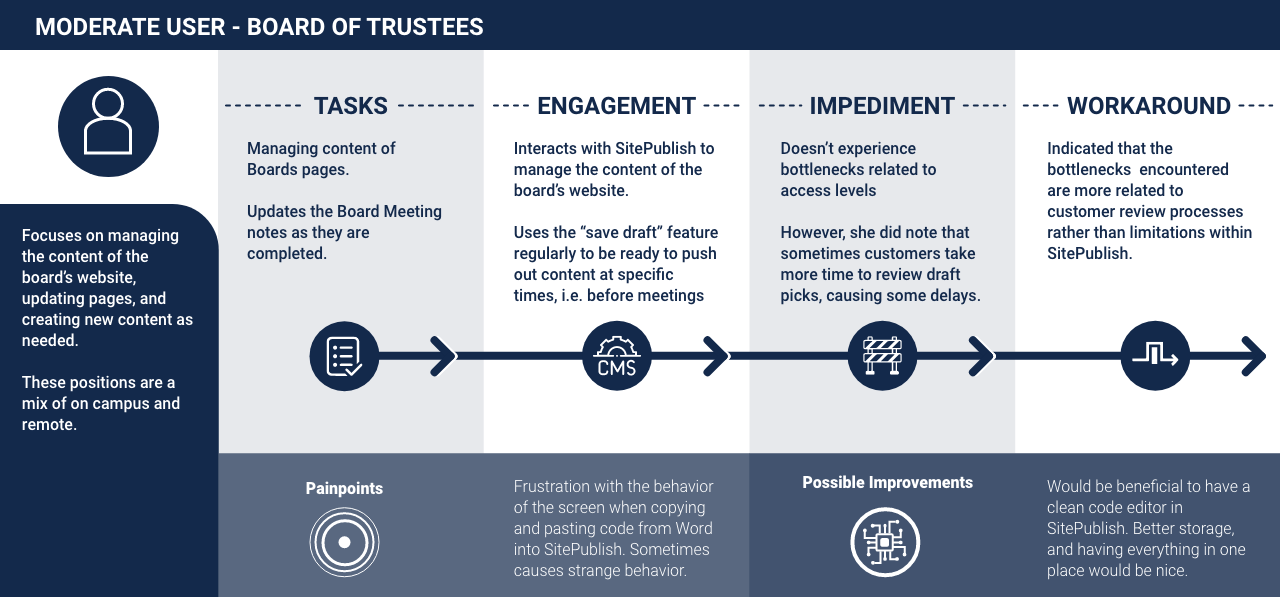
profiles
personas
Research
Interviews
stakeholder management
Empowered Department Autonomy
De-Risked Enterprise Migration
Operational Cost Reduction
The University of Illinois operated on an outdated, legacy Content Management System (CMS) that created severe operational friction. The system possessed critical security vulnerabilities, lacked modern publishing flexibility, and required constant, manual IT intervention for basic content updates.
Fragmented departments operating in silos and a bottlenecked IT department, the university faced a high-risk migration. I focused on identifying the bottlenecks for users and support staff to transition to a modern CMS.
I led user research, discovery, and experience strategy across multiple university system touchpoints. I mapped current workflows and translated technical backend liabilities into high-impact visual narratives. I established a unified governance roadmap that empowered non-technical departments with publishing autonomy while drastically reducing IT operational overhead.
Tension Point
Individual university departments demanded absolute independence:
design decision
I Designed a Controlled Self-Service Framework:
the trade-off
I balanced department freedom with heightened data security considerations:
Senior UX Consultant / Experience Architect
User Profiles, User Research, User Interviews, Stakeholder Interviews
Solution Architects, U of I IT Lead, U of I Cybersecurity lead, Business Analyst, Business Process Consultant, User Researcher, Engagement Manager, Internal Leadership, Subject Matter Experts
1.5 months to deliverables
Enterprise CMS/LMS Migrations, Corporate Intranets, System Governance, Workflow Optimization
To capture the reality of the university's fragmented ecosystem, I conducted deep-dive user interviews across a diverse array of academic and administrative departments.
I focused on uncovering how non-technical staff interacted with the legacy CMS, mapping out the hidden manual workarounds and identifying exactly where workflows stalled due to forced IT dependencies.
Following the research phase, my team organized hundreds of qualitative responses into structured, macro-level operational themes. We isolated and categorized common friction points, creating a definitive index of:

To ensure our multi-disciplinary consulting team projected a unified, trustworthy message to the client, I established a strict stakeholder communication framework.
I designed highly accessible graphic presentations that clearly illustrated the "before and after" of the proposed CMS architecture, giving university leadership a crystal-clear, risk-mitigated roadmap for implementation.
Things I learned throughout this process.
