Walking in Their Shoes: Humanizing Data through End-to-End Patient Journey Mapping
Research
Interviews
ai analysis
personas
patient journeys
Unified Stakeholder Alignment
A Scalable Experience Blueprint
Identified Digital Interventions
Navigating a large hospital network is inherently high-stress and usually fractured. The healthcare system collects vast amounts of operational and IT analytics, the actual human experience, was obscured by departmental silos. This lack of holistic visibility led to patient confusion, administrative delays, and compromised care satisfaction.
I sought to diagnose these systemic breakdowns. I led a comprehensive research and service design initiative to map the end-to-end patient journey. By synthesizing quantitative IT analytics gathered by the clients team with my qualitative patient surveys.
I developed an experience framework that humanized complex data, balanced conflicting stakeholder needs, and provided a tactical roadmap for patient-centered operational changes.
Tension Point
Potential competing interest of pure data verses human factors
design decision
Synthesized Analytics with Qualitative Personas and Journeys
the trade-off
Dedicating project timeline to qualitative survey loops and empathetic modeling:
Lead UX Strategist, Research
Patient Profiles, Patient Flows, User Research, User Interviews, Stakeholder Interviews
Solution Architects, Business Analyst, Business Process Consultant, User Researcher, Engagement Manager, Internal Leadership, Subject Matter Experts, Client IT Lead,
2.5 months to deliverables
Healthcare Systems, Service Design, Service-to-Digital Blueprints, Complex Operations
I initiated a dual-track discovery phase to map out every physical and digital hospital touchpoint.
My team combined existing backend IT analytics data (tracking processing bottlenecks and drop-off rates) with active surveys targeting current patients navigating the system. This comprehensive audit captured the critical highs, lows, and hidden friction points of the ecosystem.
To synthesize the research, I developed highly detailed User Personas representing key demographics engaging with the health system. These personas defined:
These personas served as our foundational hypothesis, allowing the design and product teams to accurately predict patient reactions to software and operational changes.
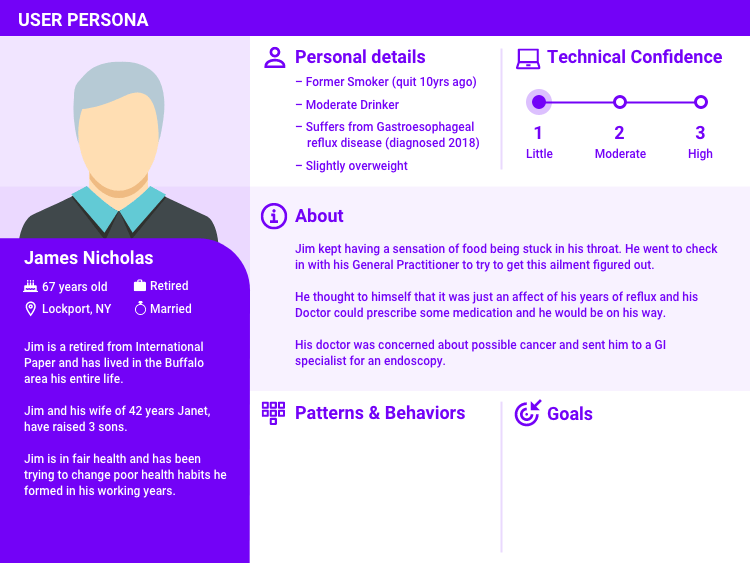

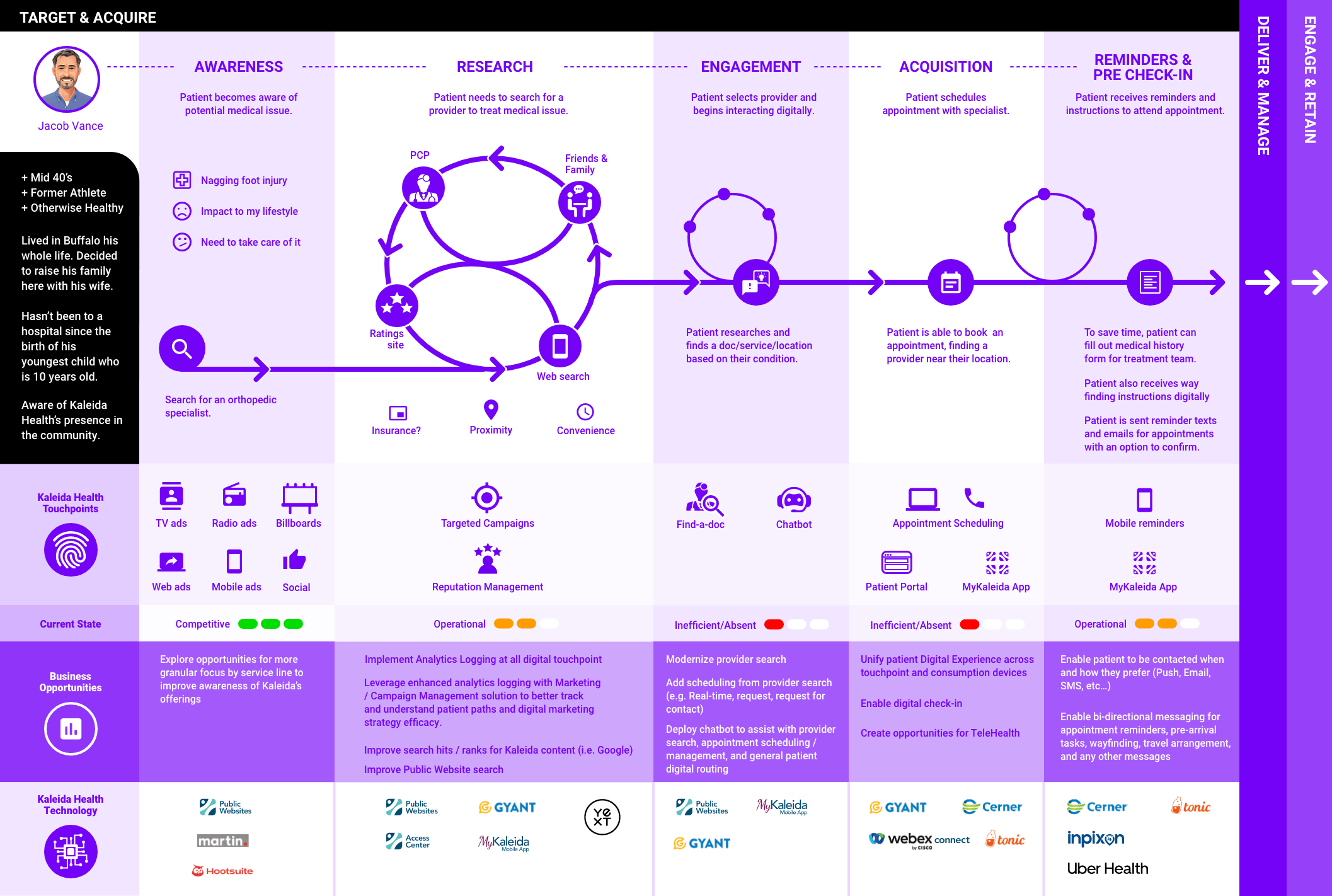
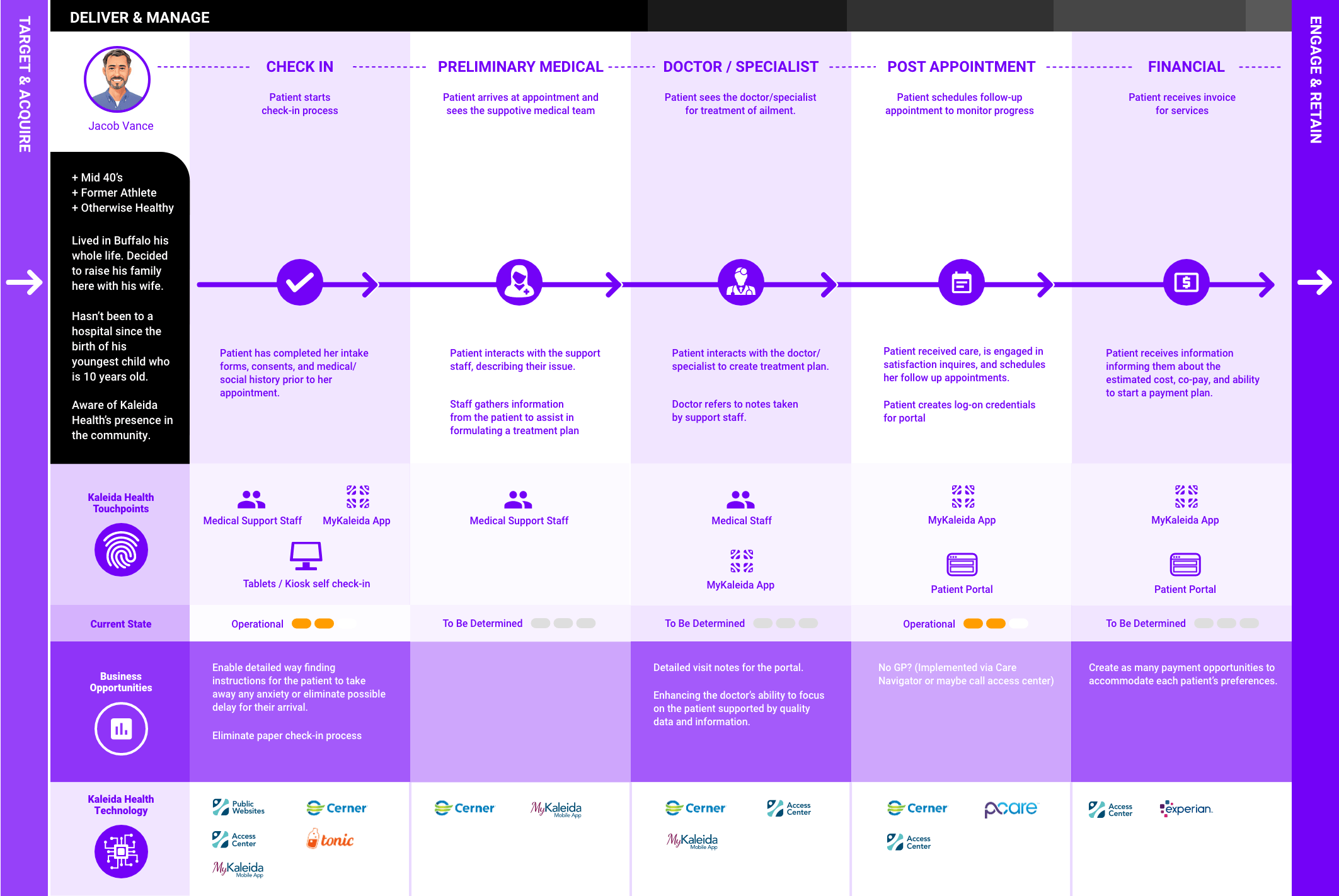
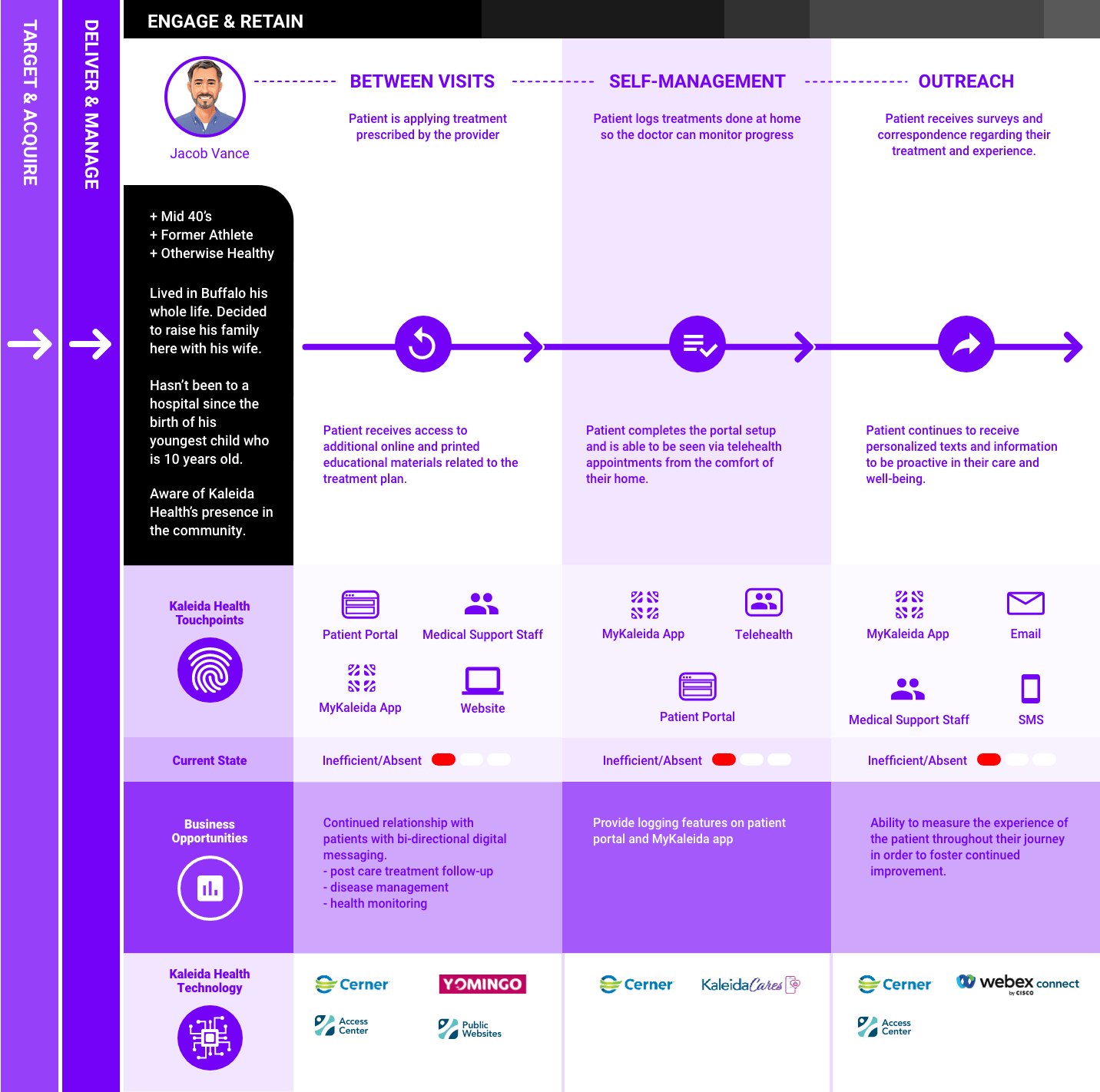
Using the personas to anchor our design choices, I built a holistic Patient Journey Map.
This architectural document visualized the entire cross-functional ecosystem, highlighting exactly where operational breakdowns occur, where communication drops, and where trust is built.
The final output provided executive leadership with a clear, prioritized roadmap to guide future software and service updates.
Things I learned throughout this process.
